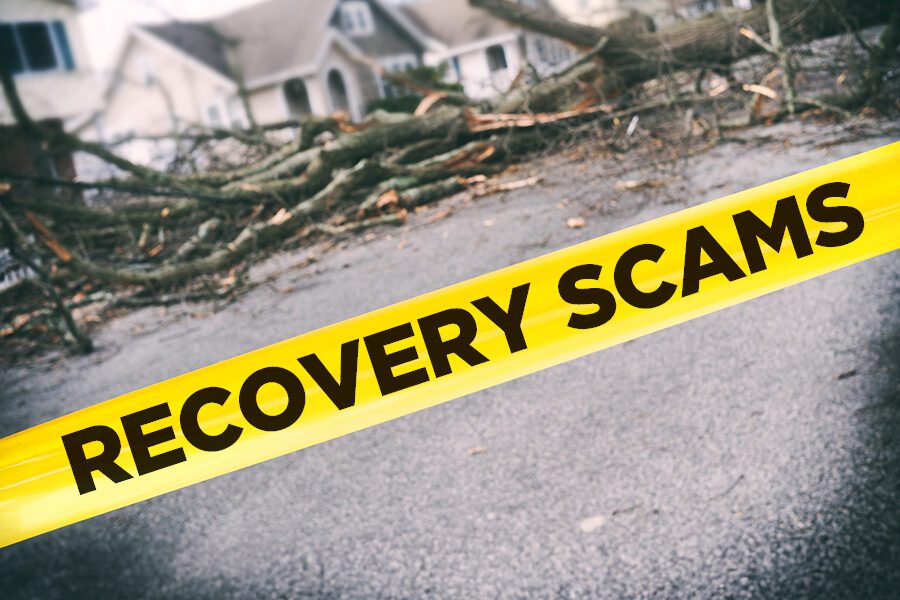
After a natural disaster, the primary concern is often rebuilding and getting life back to normal. Unfortunately, scammers often exploit these vulnerable times, targeting people when they are most in need of help. This guide will help you recognize common recovery scams and provide practical steps to protect yourself and your community.
Scammers target people during the confusion following natural disasters, using deceptive tactics to defraud those seeking assistance. Reports of fraud often emerge after such events, highlighting the urgent need for awareness among affected communities.
Sellers hike prices on essential goods like fuel, water, and generators, claiming shortages to pressure you into overpaying. This unethical practice strains personal finances and limits access to necessary supplies for those in need.
“Storm chasers” offer quick fixes, demanding full payment upfront before disappearing or doing subpar work. They may use fake credentials or official-sounding language to seem legitimate.
Scammers set up fake websites or impersonate real organizations to solicit donations, often demanding immediate payment via cash, gift cards, or wire transfers. They exploit goodwill to divert funds away from actual relief efforts.
Scammers pose as officials from government agencies or insurance companies, asking for personal information or fees under false pretenses. Remember, legitimate officials will never ask for payment to provide assistance or process applications.
Stay vigilant and protect yourself from scams. For more information on staying safe, visit consumer.ftc.gov.
If you suspect fraud:
By staying informed and cautious, you can protect yourself and contribute to the resilience of your community after a natural disaster. Taking these precautions not only safeguards your well-being but also helps prevent fraud from spreading to others. Together, we can rebuild stronger and smarter.
